Hey there once again, fellow artists, and welcome to a quick-fire lesson in just a few of the elements of art—which, if you didn’t know, are just some of the key components that we should try to add to our paintings to make them speak to us visually.
Now, there are actually 7 total elements of art, and we’ve already discussed one of them, value, in a previous blog post. In today’s post, we’re going to go over 3 of the most basic elements, though, which include line, shape, and form.
While you can certainly make any painting without actively thinking about the elements of art, it can help you hone your painting technique by paying attention to them. The more you can learn about the elements of art, the more comfortable you may feel in designing your own paintings from scratch, too.
So, since line, shape, and form each kind of build upon one another, let’s go over each element in order to help you get a good grasp on ’em.
Element 1: Line
The line is the most basic building block in art, and I probably don’t need to tell you what a line actually is. However, the way you create lines in a painting matters. And, actually, lines in a painting don’t have to be straight—they can curve and bend, too.
For example, one popular way to use lines in a painting is with outlining–I mean, literally, “line” is in the word!
Outlining is a way to make certain objects and subjects in a piece really pop or stand out. And, when we perform outlining, the thickness of the lines we create with our brushes matter. For example, a thinner line won’t stand out as much as a thicker one, but, sometimes, a line that is too thick will take our eyes away from the object we’re outlining.
To see the work of lines in action, take a look at the images below, taken from my online “Beauty and the Beast-Inspired” painting class. The image on the left shows a portrait of our beloved princess, Belle, without outlining while the image on the right shows her with outlining.
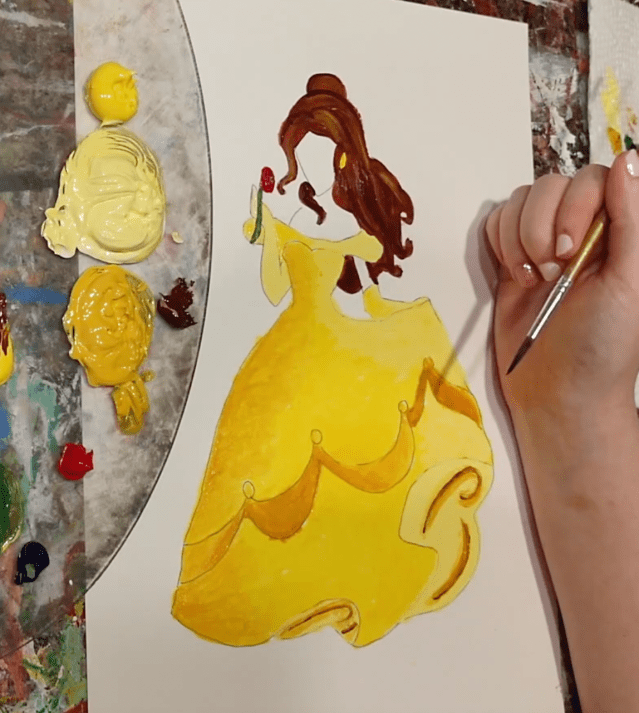

Notice how much adding some simple lines can make a subject really pop off the page!
Element 2: Shape
Once lines connect, they can create a shape, which is defined as any two-dimensional object in a painting. Oftentimes, you’ll see simple geometric shapes used in abstract art, like squares, circles, triangles, etc. However, a shape can be more than just a common geometric object—it can use curved and bent lines, like we discussed above, to make freeform shapes, too.
When you create a painting, either in a class setting or on your own from scratch, you can make or obtain a sketch first to get an idea of how your painting is going to be made. A sketch, whether it’s made with pencil, ink, or your own paints, can map out all of the lines and shapes that will go into creating your finished painting.
Take a look at the images below as an example of how shapes in a sketch play into making a painting come to life. The image on the left shows a sketch of a barn, and it uses multiple geometric shapes. On the right, you’ll see the finished painting of the barn—all screenshots taken from my online red barn painting class.


Once a shape takes on a three-dimensional look, though, as we see in the image on the right, it becomes a form, which is our next building block in art.
Element 3: Form
Form is the “advanced” version of a shape, and form is any 3-D object we see in a painting. Or, at least, any object that appears to be three dimensional, since paintings are typically flat on a canvas or other surface.
There are, of course, multiple ways to turn a shape into a form, but utilizing value is one of the most common. Value, as another element of art, helps us create highlights and create lowlights, which come together to make an object or subject appear more life-like.
Take a look at the image below to demonstrate the idea that forms are created from shapes. There are two circles there—however, the one on the left is a simple shape that does not have any value added to it, making it appear more two-dimensional. The circle on the right has a white highlight added to it, employing the element of value, and making it appear more three-dimensional. This screenshot is taken from my free online blending and values workshop.
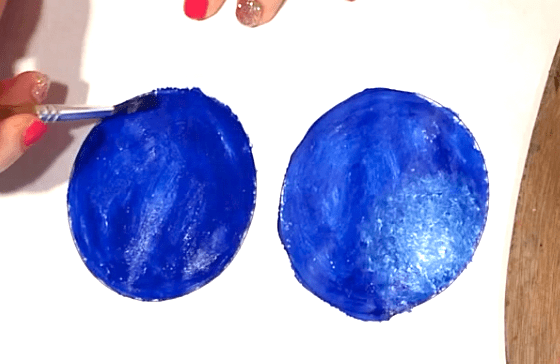
Forms don’t have to be simple geometric shapes, either. In fact, most forms we see in paintings replicate the intricate forms found in nature around us. One example of this can be seen in roses, which we know can sometimes have oddly-shaped petals—just take a look at the examples below.


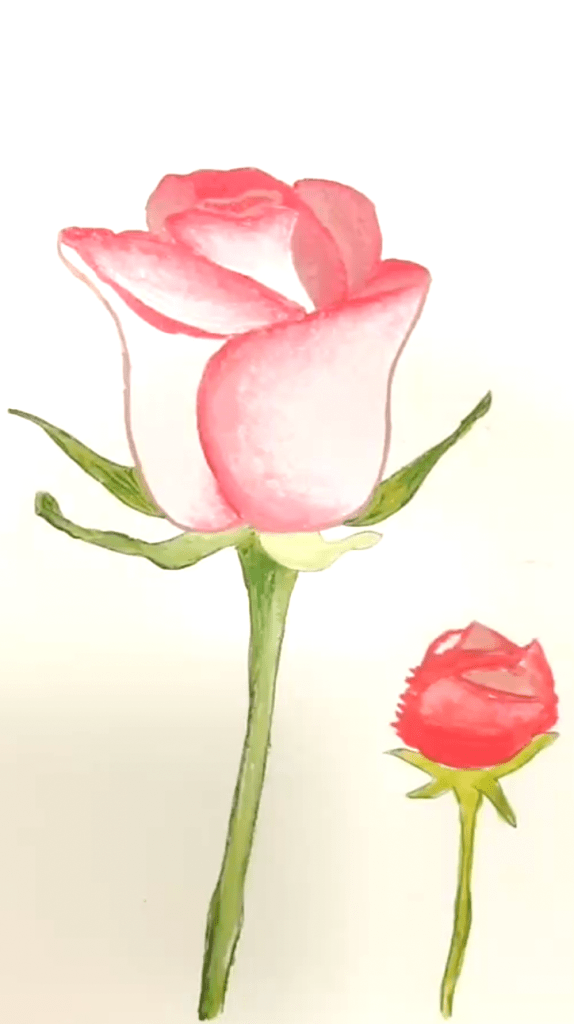
Take a closer look at each of the petals and leaves in each of these paintings, and notice how they aren’t complete circles or triangles. Instead, they use some curved lines and some straight lines to make their own freeform shapes which are then turned into forms with lots of highlights and lowlights.
Now, I know, there’s a lot of information here to digest. But, like I said at the top of this post, you don’t have to actively think about each element of art as you create your own paintings—whether you’re a complete beginner or you’ve been an artist for a while. Just be aware of these elements, and you’ll be able to implement them the more you practice painting.
And, if you’d like to get in some more painting practice or learn more about painting techniques, be sure to check out my online learning platform for all levels of painters, called Canvas Academy!
Canvas Academy offers over 100 hours of painting class videos, plus downloadable workbooks, files, and more. There are tons of full painting courses to try, which will teach you not just the basics of art but also how to actually make paintings of everything from flowers and fruits to landscapes, portraits, and more.
With Canvas Academy, you can learn at your pace and, most importantly, in the comfort of your own home. Come and learn alongside other artists just like you!
And, for more painting tips and tricks, be sure to check out my full art-related blog reel here.
I hope this quick lesson in line, shape, and form helps you on your painting journey!
–Kari

 Kari Lynn M.