Hey there, fellow painter! Ready to learn what “still life” paintings are and how to actually go about making one of your own?
Because that’s what this article is all about today–plus, we’ll be sharing a lot of tips when it comes to making fruits in still life paintings. Because, yep, fruits are the heart, if you will, of “still lifes”. Of course, not all still life paintings will feature fruits, but it’s pretty common, as we’re about to discuss.
So… What Are Still Life Paintings, Really?
Put most simply, still life paintings are any paintings that feature inanimate objects, all usually arranged in a set way within the whole picture. These inanimate objects can be just about anything, including fruits and other produce items, or they can be things like flowers, seashells, vases, books, potted plants, and so on. Traditionally (as in the times of the Middle Ages and the Renaissance in Europe), still lifes have been made featuring dead animals, too.
“Still life” is also a genre of paintings, specifically those that feature inanimate objects as their subjects. As a genre, still life is all about recreating life as we see it in a picture of “stillness”. However, paintings within the still life genre can also be painted in any set style of painting; for example, in the style of realism or the style of impressionism.
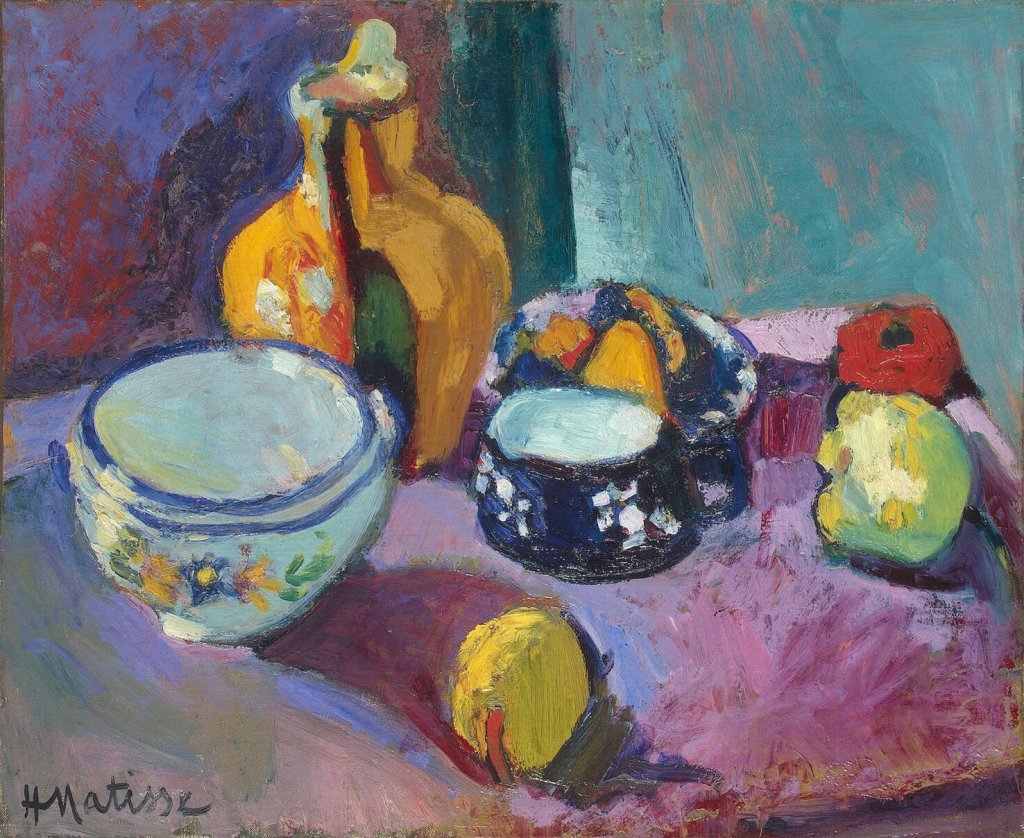
Take a look at a couple examples of still lifes below to see all of the different styles used within the still life genre.


Why Should I Paint Still Lifes?
Now, listen… whether you’e a beginning painter or a more experienced artist—you should practice making still life paintings.
There’s a reason why still lifes are so popularly made, too—they’re generally easy to paint.
This is because, with still lifes… well, everything in the painting will be sitting still. And, if you reference a photograph or real objects, your references will be literally sitting still as well—no need to worry about painting a person or animal subject that’s moving while you’re referencing them!
When you paint a still life, you’ll get more control over the composition of your painting, too. Which, if you’re not super familiar with the idea of composition, that basically means that you get to decide where to place objects on your canvas. For example, you can put them in a basket, on a table, or arranged in any certain way—it’s all up to you. For beginners, creating your own still life paintings is one of the best ways to get acquainted with composition in your art.
And, because still lifes tend to feature inanimate objects of daily life, you can practice making some common items that you may need to paint in other types of pictures later on. For example, cut flowers are commonly painted in still lifes, and practicing with these flowers in your own still life can prepare you if you’d like to paint flowers in other contexts further down the road. You can also practice simple painting techniques, like blending and color matching, very easily with still lifes.
If you use a reference setting or a reference photo for your still life paintings, you can play around with the lighting in your reference, too. For example, you can try shining more or less light on your objects from multiple different angles, and then you can see how this changes how you view and paint those objects. After all, lighting is what causes highlights and lowlights to be casted on objects, which we can recreate in our paintings to make those objects look more realistic.
Want to learn more about highlights, lowlights, and values in paintings? Check out our ultimate guide article for total beginners!
How Beginners Can Get Started with Still Lifes
Now, there are a couple of different ways you can get started making still lifes as a beginner. Remember, though, learning something new (as in how to paint still lifes!) can be tricky, so be patient with yourself, and don’t feel disappointed if it takes you a couple of rounds of practice to get the hang of it.
Method 1: Follow Along with a Class
Honestly, the easiest way to learn anything new is by learning from someone else. That’s why teachers exist!
So, there are a bunch of online painting classes that will show you, step by step, how to paint a given still life picture. Some are more suited for beginners while others are tailored for advanced painters with some experience already.
Some of the best painting classes for beginners can be found through Canvas Academy, an online painting platform with hundreds of hours of on-demand video classes with downloadable and printable guides, files, and more!
Specifically, the “Fruits & More” painting course by Canvas Academy will help you learn the basics of painting some simple still lifes featuring fruits, both in acrylic and watercolor paints. You’ll also learn tons of tips for making your fruits look more realistic, plus you’ll get an in-depth rundown on what values are when it comes to painting.

Join the “Fruits & More” Painting Course to learn how to make simple still lifes, step by step, with videos and guide files.
Method 2: Paint from Someone Else’s Photo
Although joining painting classes online is probably the easiest way to get started with painting still lifes, you can try practicing these types of paintings on your own, too. And one simple way to do that is by using a photo for reference—specifically a photo made for still-life reference.
Now, the easiest way to get a reference photo for your still lifes is by searching for free-to-use still life photos online. You can use any photo that is licensed for public domain or creative commons use, such as photos found on sites like unsplash.com or pexels.com. If you aren’t sure how to find a good photo to use, just search for something like “flowers in vase” or “fruit basket” on these sites.

The drawback with using someone else’s photo is that you won’t have much control over the composition of your painting, assuming you’ll be following the reference photo to a T (which is most recommended for beginners, too). However, you’ll have a quality photo to use, and you won’t have to worry about taking your own.
Method 3: Paint from Your Own Photo
If you’re feeling ambitious, you can certainly take a still life reference photo for yourself to use. You can do this easily with any camera (hey, smartphones!) and just simple items you find around your home—remember, think produce, flowers, dishes, etc.
The most difficult part of taking your own reference photos for still life paintings is the lighting. So, don’t be surprised if you have to take multiple photos in multiple locations of your home to get just the right angle and amount of light for your reference. Generally speaking, though, natural light is the best light, so taking pictures near windows is a good idea.
Only by taking your own photos for reference can you control how your still life painting will be in terms of composition and lighting, so it’s worth it if you’ve got the patience for photography.
Method 4: Paint from Real Life
Although it’s not the best method for true beginners, you can paint a still life from real life—without any reference photo. This is, of course, how our ancestors must have done things before they invented cameras, but, you know, there were less artists back then, too…
Paintings from real life is an advanced method of painting, but it’s a good skill to practice. You can do this for still lifes by setting up a scene with some items from around your home, and then you can just glance over at those objects as you paint. Just like with taking reference photos, though, you’ll want to have good lighting so that you can see the shapes and forms of each object set in front of yourself.
Some professional artists are able to paint certain objects without referencing them at all, either in photos or in real life. But, if that sounds pretty crazy to you, remember that those artists have had a lot of time to practice.
So, of course, the best way to get better at painting still lifes is to practice painting them. Get started today, and don’t give up on it–consistent practice, whether your paintings turn out as you hoped or not, is key!
Go forth, fellow artist, and start practicing your still life paintings.
–Kari

 Kari Lynn M.