Ever felt frustrated with your watercolor paintings?
Don’t worry—you are 100% not alone.

Learning to paint with watercolors can be extremely tricky, especially as a beginner. And there’s actually a scientific reason (yes, really!) why. And, of course, there are ways to make watercolor painting way easier on yourself, too.
So, if you’re looking for a way to paint in watercolor that won’t give you a major migraine, you’ve come to the right place.
Why Is Watercolor so Hard for Me?
There is one big reason why painting in watercolor is tricky. And it all has to do with, literally, part of the name: water-color.
Traditional watercolor is made by adding water to some form of pigment, whether the pigment is in dry form or comes as a gel (like those in tubes). Scientifically, the addition of water to these pigments change how they act as a paint—the more water you add to them, the more they are going to act just like water. And we all know water likes to drip, run, and flow, making it inherently difficult to keep in one place.
This is why even some watercolor artists who have been practicing with watercolor for years and years still have trouble controlling the result of their paintings. Because, with so much water content, this type of paint does not like to stay exactly where it is applied on the page or canvas.
Additionally, because water is a translucent medium, anything painting in watercolor will be generally transparent. This is what gives us the classic “pastel” look of watercolors. However, this is also what makes covering up mistakes in a watercolor painting nearly impossible.
Because watercolors are so transparent, meaning you will always see what is behind the paints on the page, you can’t layer watercolor over watercolor and expect the top layer to completely hide the bottom layers. So, if you’ve ever tried to mask one part of your watercolor picture with more watercolor and found that it didn’t exactly work out, that’s why.
What’s the Alternative to Watercolor Paints?
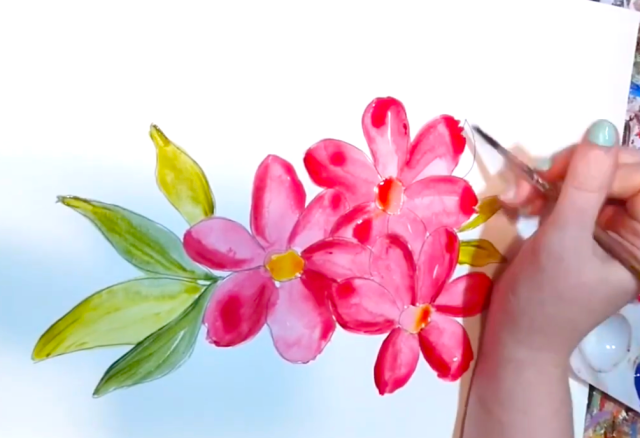
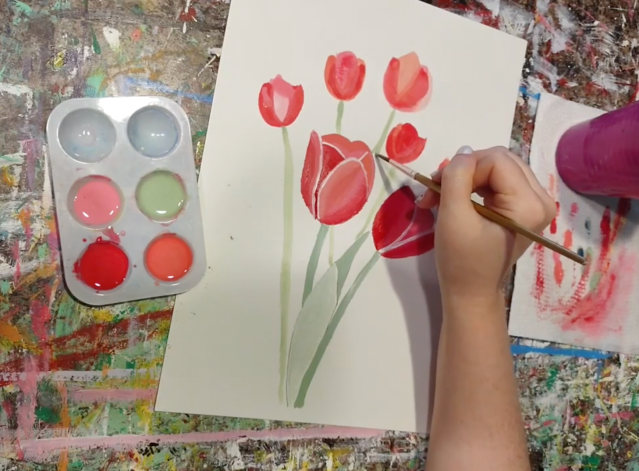
One of the best mediums for beginner painters to start using is actually acrylic paints. Acrylic paints act very similar to oil paints on their own, which is the type of medium traditionally used since the times of the Renaissance, but they can also be used to create watercolor effects with the addition of water, too.
Acrylic paints are thick-bodied, meaning they hold their shape when applied to the page and do not drip or run like watercolors do. In addition, acrylics are water-based paints, as are watercolors, so they can be used to create the look of traditional watercolors when you add tiny amounts of extra water to them. Plus, acrylics are waterproof when dry, unlike traditional watercolors, which can be a bonus if you ever expose a finished painting to rain or other conditions.
As a professional painting instructor, I personally teach my students to make their own “watercolors” out of acrylic paints. We can do this by adding a little, or a lot, of clear water to acrylic paints on a palette. This allows us to better control how the paint looks and feels when applied to the paper or canvas.
It’s almost like painting with traditional watercolors but with a slight upgrade. Watercolors made from acrylics are not only easier to control (as we can better control how “wet” the paints are), but they are easier to mix into any color we need as well.
To get started painting with watercolors made from acrylics, I suggest checking out this “Watercolor with Confidence” Painting Course, which will not only show you ways to make your own watercolor paints but will boost your confidence in the world of painting with uplifting chats in every single class session.
The Benefits of Acrylic-Made Watercolors
- Less drips, less runs
- Faster drying time
- Easier to mix new colors
- Thicker-bodied paint means easier control
- Waterproof result when dry
Tips for Using Watercolors
Whether you use traditional watercolors or make your own out of acrylic paints, there are a couple of tips to keep in mind. Above all, remember that watercolors are primarily water, so you need to work with, not against, the nature of water while you’re painting.
Add as little water as necessary
To keep your paint from running and spilling all over your canvas, be sure to only add as little water as needed while painting. You can still use watercolor techniques, like the wet-on-wet technique, but try to keep water use down so that runs are less apparent.
Using less water also prevents different areas of your painting from running into each other and accidentally mixing. Plus, it will decrease your drying time in between sections and layers of paint.
Give the painting proper drying time
Speaking of dry time, it’s important to let watercolors dry completely before layering on top of them. Because, since watercolors are very transparent, layering does play a key role in adding more and more details to a painting, but you need to let layers dry so that they don’t all meld together.
If you accidentally add too much water to any area of a painting, you can always use a napkin or sponge to soak up some excess water. Soak up just a little at a time, though, to avoid adding extra textures to the page that you don’t want to be there. Less water will result in a dryer section that can be layered on top of more easily.
Use smaller brushes
One thing that beginners often do is reach for the largest paintbrush they have to make their watercolor paintings go faster. However, this isn’t always ideal because it makes also makes it easier to spread watercolors into areas where you don’t want them to go.
Smaller brushes are easier to control, which helps tremendously because watercolors are already heard to control. This is especially true for the finest of details in any painting. You can use a combination of flathead and roundhead brushes for watercolors, but try to reach for the smaller ones first. It may take you longer to paint a section with a small brush—but it’ll be worth it when it helps you avoid unwanted mistakes.
More Watercolor Practice
Now, the best way to get better at watercolor painting is… well, to practice watercolor painting!
You can do this with online painting classes, too, which make it easier than ever to paint from the comfort of your own home. All you’ll need to join classes, like those listed below, are some paints, brushes, and canvas or watercolor papers.

And remember, fellow artist—the best way to work with watercolors is to go with the flow, just like water does.
–Kari
 Kari Lynn M.